
Let’s face it: If your pool is longer than 30–33 feet, you’re in the large‑pool category. You already know what that means: more surface area, more debris, and more time spent cleaning. Traditional tools make this worse. You skim by hand. You vacuum slowly. You scrub the waterline again and again.
More homeowners and facility managers now turn to robotic pool cleaners, but most robots target small backyard pools. If you manage a large or mid‑sized pool, you need a different standard. This guide shows you how to choose a commercial pool vacuum that actually works for large pools.
Why Large Pools Are Harder to Clean
Cleaning a large or commercial pool isn’t just a bigger version of residential maintenance. The demands are different, and the margin for error is much smaller.
Scale and Complex Layouts
Once a pool exceeds 33 feet, cleaning gets harder fast. You cover more square footage. Shapes get more complex. Steps, ledges, and long walls create blind spots. Without enough power or smart path planning, it’s easy to end up with dead zones where algae and dirt build up over time.
High Daily Usage
Unlike a private pool, commercial pools are often open 12 to 15 hours a day. Your cleaning window is short, and traffic is constant. Sunscreen oils, hair, skin cells, and outdoor debris enter the water all day long. That means you need a cleaner that works fast and can be deployed daily without wasting time on cable management or setup.
Rigorous Hygiene Standards
Public pools are governed by health regulations, not just visual standards. In the U.S., the CDC’s Model Aquatic Health Code requires free chlorine between 1.0 and 4.0 ppm and a pH range of 7.2–7.8 for public pools. Other regions apply even tighter limits. If cleaning slips, compliance risks rise.
Why Traditional Pool Cleaning Tools Fall Short
Most large pools still depend on manual work.
You test water every few hours. You skim with a pole net. You empty baskets. You clean the deck. Then you spend the most time on physical tasks like floor vacuuming and waterline scrubbing.
Traditional commercial pool maintenance requires constant supervision. For example, manual skimming never stops, and the results depend on staff experience and time. This approach works, but it wastes labor and makes consistency hard to maintain.
Smarter tools already exist.
Commercial-grade robotic cleaners can clean much more smartly and hold more debris. The challenge is choosing a model that’s actually designed for large pools rather than scaled-up residential use.
What to Look for in a Commercial Pool Vacuum Robot
Don’t shop by price alone. Focus on performance. These six factors matter most.
Go Cordless
Cordless robotic pool cleaners are now common in residential pools, and they’ve finally reached a level that works for large pools too. Cabled robots avoid battery limits, but the power cord adds drag, increases setup time, and creates wear and safety concerns.
A cordless commercial robot removes those issues. You drop it in, start the cycle, and let it run—no cable management. No untangling. Less effort for your staff.
Suction Power & Active Brushing
Cleaning performance comes down to suction and brushing.
You’ll want strong, consistent suction that can lift sand, silt, and leaves in a single pass. Even when a pool looks clean, walls and waterlines still need regular brushing to break down biofilm and early algae growth. That requires steady water flow and enough suction volume to keep debris moving into the filter.
Active brushes matter just as much. Robots with powered, motor-driven brushes scrub continuously instead of relying on passive contact from the wheels. This improves cleaning efficiency and reduces the need for manual wall brushing.
Intelligent Navigation
Random movement doesn’t work well in large pools. You need structured path planning.
Robots with sensor-based mapping or SLAM-style navigation track where they’ve been and where they still need to clean. This helps reduce missed areas and cuts down wasted runtime, which matters when you’re cleaning hundreds or thousands of square meters.
Battery Endurance
Since you are going cordless, runtime is king. A large pool can easily require several hours for a full cleaning cycle.
Look at battery capacity in relation to pool size, not just advertised runtime. Some commercial models now support up to 8 hours of operation and can handle pools as large as Olympic-size facilities without stopping halfway through.
Cleaning Areas
Floor-only cleaning isn’t enough for large pools. A commercial pool vacuum should clean the floor, climb walls, and scrub the waterline. Manual waterline brushing every day adds up fast, and automation here saves serious labor.
Filter Capacity
Small filters mean frequent stops. For commercial use, you’ll want a high-capacity debris basket that can handle heavy loads without constant emptying. Large-volume filters in the 6L to 24L range are now available and make daily operation much easier.
Why the Genkinno Commercial Pro Fits Large Pools?
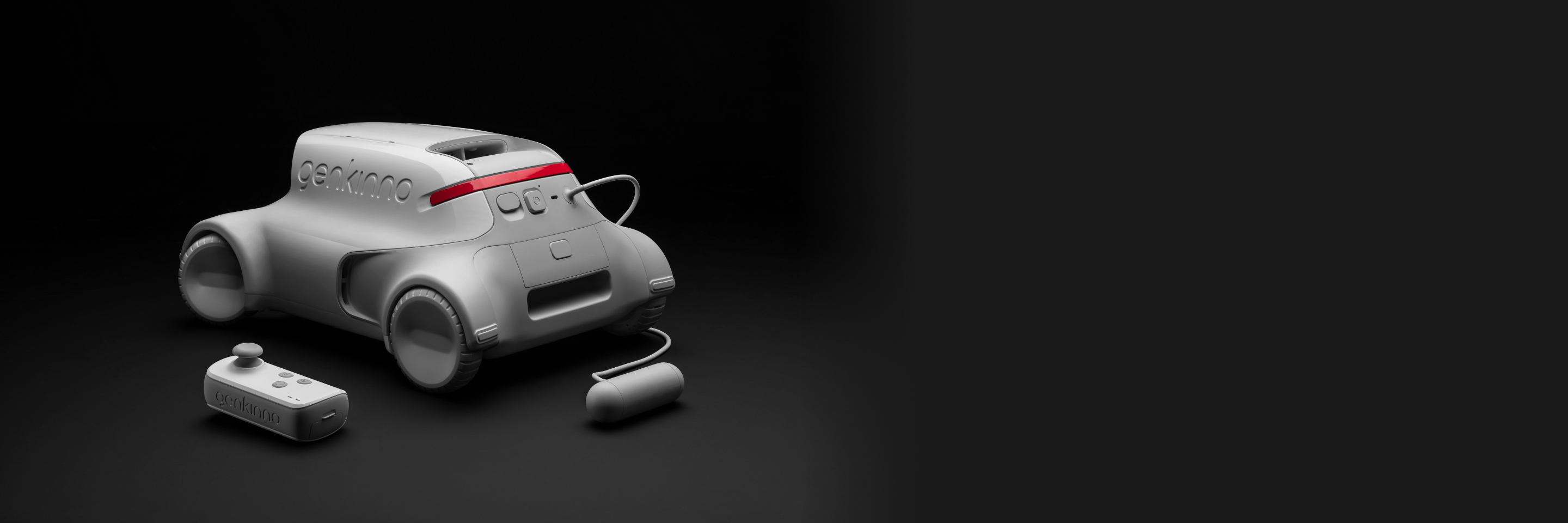
The Genkinno Commercial Pro was designed for facilities that need more than residential performance without stepping into complex industrial systems. Here is why it’s the go-to choice:
-
Cordless: It runs fully cordless, so you won’t deal with power cables or setup delays. You can set schedules through your phone App, and the robot handles the rest.
-
Adaptive Nav 4.0 Technology: It doesn't just wander; it maps. It uses 16 precision sensors to navigate complex commercial pool layouts, ensuring consistent coverage across floors, walls, and the waterline.
-
Industry-Leading Suction: With a suction rate of 10,140 GPH, it’s built to handle heavy debris and persistent buildup. It acts like an industrial vacuum, stripping away stubborn algae and heavy debris effortlessly.
-
8-Hour Epic Endurance: While most cordless robots die after 90 minutes, the Commercial Pro can run for up to 8 hours on a single charge, making it capable of cleaning multiple pools or one Olympic-sized facility.
-
Massive 24L Filter Basket: Its "mega-sized" basket allows it to collect vast amounts of leaves and silt, meaning your staff spends less time cleaning the robot and more time on other tasks.
-
Full Coverage: With optional accessories, the Commercial Pro can also support surface cleaning, expanding its role beyond underwater tasks.
Final Thoughts
Large and commercial pool cleaning is demanding, but the right equipment changes how much time and labor it takes. A capable robotic pool cleaner lets you automate the most repetitive tasks and maintain consistent results day after day. When the robot does heavy work, your team can focus on water quality, safety, and overall facility upkeep.
FAQ
Q: Is a cordless commercial pool vacuum robot powerful enough for deep commercial pools?
A: Absolutely. Modern cordless tech, like that in the Genkinno Commercial Pro, uses high-torque brushless motors that provide more consistent suction than many older corded models.
A: Absolutely. Modern cordless tech, like that in the Genkinno Commercial Pro, uses high-torque brushless motors that provide more consistent suction than many older corded models.
Q: How do I retrieve the robot if the battery dies in the middle of a large pool?
A: Quality commercial robotic pool cleaners feature Auto-Parking. When the battery is low, the robot automatically navigates to the edge of the pool wall for easy retrieval.
A: Quality commercial robotic pool cleaners feature Auto-Parking. When the battery is low, the robot automatically navigates to the edge of the pool wall for easy retrieval.
Q: Can it handle tile and vinyl liners equally well?
A: Yes. Commercial robots are typically designed with multi-surface rollers that provide high-friction grip on everything from smooth tile to rugged concrete.
A: Yes. Commercial robots are typically designed with multi-surface rollers that provide high-friction grip on everything from smooth tile to rugged concrete.
Artículos relacionados